For any collector wanting to make good purchases or needing to sell coins at a fair price, knowing the market rules via a free coin scanner becomes necessary, because the numismatic market, like any other, changes often, causing the price for a specific piece to climb, drop, or stay the same over time.
Coins, unlike goods with set costs, do not hold one fixed value, depending instead on many items, including their historical story, the number made, and most strongly, their physical state, requiring the collector to build skills for checking past trades, allowing the current market cost to be found.
This type of useful analysis starts with looking closely at auction records and sales graphs, acting as the main sources of real facts about the actual money paid by buyers.
Auction Archives — The Source of Real Facts
An auction archive works as a large database, holding records of every coin sold at public sales, making it the most reliable tool for finding the market price, since it records real-life deals, not just estimated numbers from price guides.
Looking at these stored records gives a clear idea of the amounts collectors are truly ready to pay for a coin at a certain moment, showing greater accuracy than any personal guess.
Each piece of data in the auction record holds several needed parts you must think about when checking prices:
- Telling exactly when the coin was sold becomes useful for seeing how prices move over time, letting you know how long ago that price was recorded.
- The total amount the coin was bought for, showing the market’s real desire to pay that specific cost.
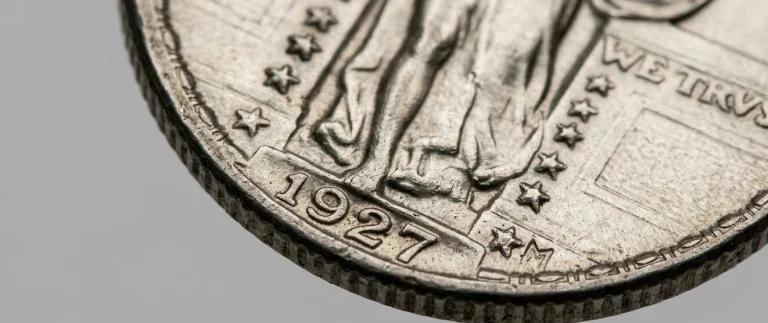
- Holding all details about the coin, including the year it was made, its face value, its mint mark, and most critically, its grade or condition.
- This is the deciding measure, because the price for a coin in a perfect state will be many times greater than the cost for the same coin in a circulated state, making any price check without knowing the grade pointless.
- A visual proof of the coin’s state, helping to confirm if the written details match the actual look, becomes especially useful for coins showing unusual marks or colors.
You should keep in mind that the prices listed in the archives are often the “hammer prices”, not adding the auction house’s fee, which the buyer must cover, causing the final amount paid to increase by fifteen to twenty-five percent.
When you check the data, you should always use the hammer price, standing as the clean market value, while the fee itself changes often.
Using Charts to Understand the Flow
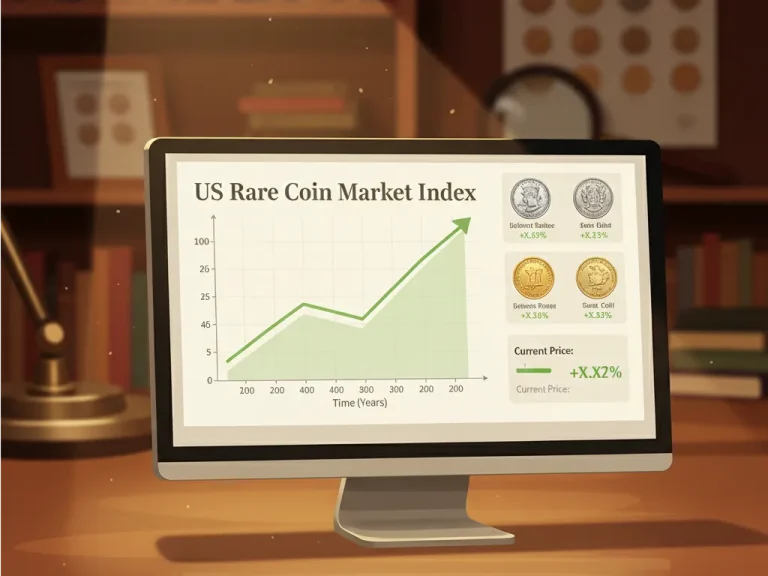
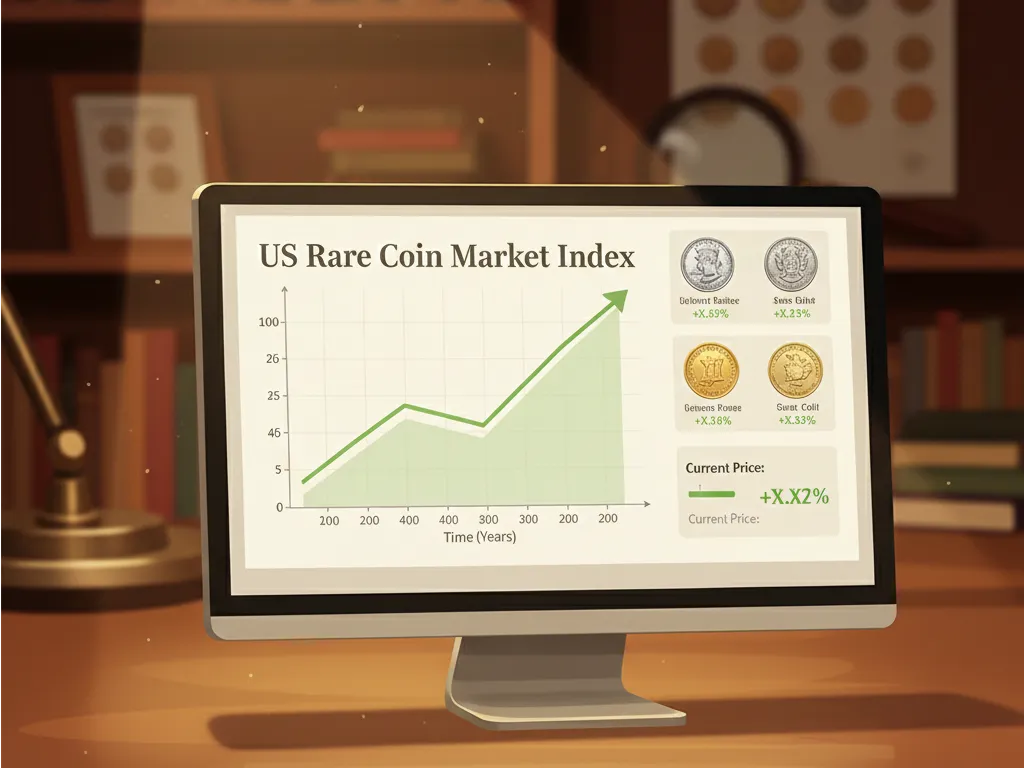
Price charts let you clearly see how a coin’s value has changed across many years, giving the chance to find the long-term flow, which is something impossible to see when only viewing single auction records.
A chart from a coin appraisal app is usually made using the average sales costs for certain periods, such as three months or one year, showing the smooth path of the market.
Checking the chart means looking at these elements:
If the chart line is always going up, this shows a steady price increase and a good chance for the coin to grow in value, making it a solid choice for saving money for a long time.
If the line drops down, it signals less wanting of the coin or more coins being available, requiring caution before buying.
A line rising steeply means the cost is growing quickly, possibly showing a sudden jump in demand or the discovery of new facts about the coin.
Quick moves often happen when a coin of truly exceptional quality is sold or a new record price is set, while sudden drops can result from a quick sale happening below the typical market rate due to the seller needing money fast or making an error.
- The number of trades is often shown as bars below the main line, telling the amount of coins sold during that time, reflecting how easy the coin is to sell, with a high volume showing the coin can be sold easily.
To build the most exact chart, you must only use sales facts for coins having the same grade, for example, drawing a chart only for coins rated “Mint State” to stop mistakes caused by differences in condition.
Factors Changing the Price
A coin’s price does not just happen; it is created by several basic facts, making it easier to guess where prices might go next, standing as a needed skill for any experienced collector.
- The coin’s state becomes the strongest factor fixing the cost, where moving up just a single step on the grading scale (for example, from MS-63 to MS-64) can lead to the price doubling or tripling, because perfectly preserved coins are rare finds.
- A lower number of coins made in a certain year or style means a higher cost, because fewer are available, and rarity always pushes the price higher when people want it.
If a coin belonged to a famous person or was part of a known collection, its cost might rise much more because of the extra value added by its past life.
Interest in a certain series or type can grow because of new books, shows, or a special anniversary, making the demand increase for a short or long time, pulling the prices up with it.
During times when the economy is uncertain, rich collectors might see rare coins as a safe place for their money, raising the demand for investment and the total cost of expensive coins.
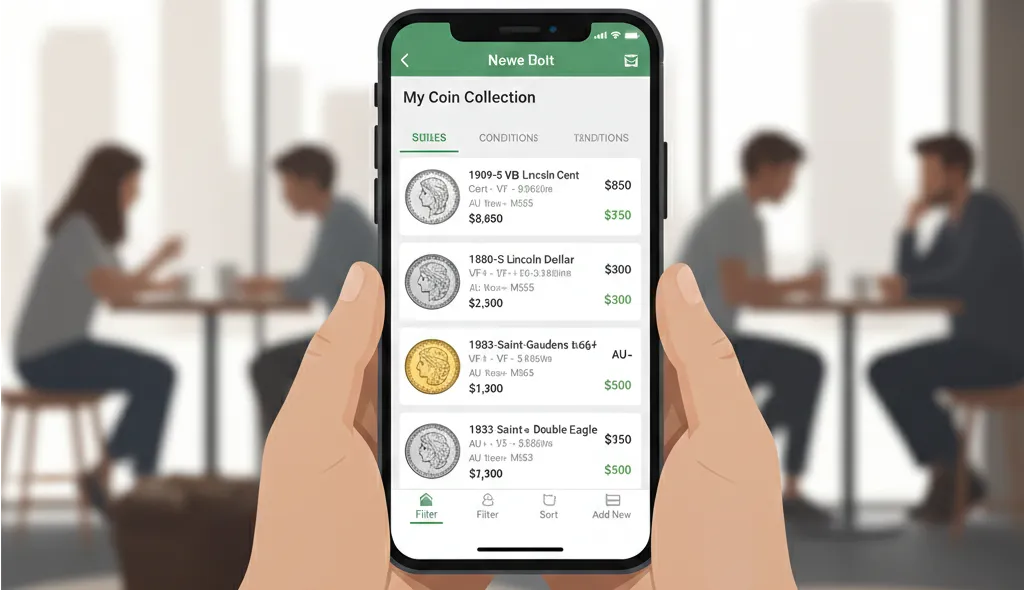
Step-by-Step Way to Check the Price
To value a coin with a coin worth app correctly, you should complete a set of actions based on gathering and comparing facts from the auction records:
Clearly list all its features: the value printed on it, the year it was made, the mint mark, and its variety.
- Use the known grading scale to name the coin’s condition as closely as possible, checking the amount of wear, marks, brightness, and the quality of the strike.
- Type the exact facts into the auction archive search to get a list of all recent sales, making sure to filter the results by the date sold, choosing the most recent deals.
- Select five to ten of the most recent sales that took place within the last twelve to twenty-four months to get a fresh understanding of the current market.
- Remove the highest and lowest prices from your group, since they often stand as one-time events, and find the middle value of the prices left, showing the most accurate measure of the current market cost.
- Compare the median price you found with the overall direction of the flow seen on the chart, making sure the price was not set too high or too low because of small market swings.
Example using the median: If a coin of the same grade sold for 100, 110, 105, 90, and 150 money units, then removing 90 and 150 leaves a median value of 105, showing the real price level better than finding a simple average.
How Coin Condition Fixes the Price
As discussed, the coin’s grade is the deciding factor, and even a small change for the better in condition can cause a large jump in cost, as shown in the following table, displaying how much grade affects the price using a made-up example coin.
| Grade | Description of Condition |
| G (Good) | Heavy wear, main picture lines are almost flat |
| VF (Very Fine) | Main details are seen, medium wear, all letters clear |
| AU (About Uncirculated) | Rarely used, holds some shine, a few small marks |
| MS-60 (Mint State) | Unused, but has small flaws from the mint or storage |
| MS-65 (Gem Mint State) | Perfect condition, strong bright shine, no flaws seen |
Making Decisions Based on What You Find
Knowing how to read charts and use auction records changes the collector from someone who simply buys to someone able to make informed financial choices, acting as the foundation for collecting successfully.
When you notice that the price for a coin you want has grown by eighty percent over the last five years, and the number of sales stays high, this signals a strong market and a good chance for your investment.
However, if a coin shows low sales and a falling price on the chart, it tells you that fewer people are interested, meaning you should only buy it at a much lower cost.
Always checking this data helps you stay aware of the market state, making collecting both fun and financially smart.